Posts

Tips to Deal with Kidney Stones and Prevent Their Recurrence.
Image
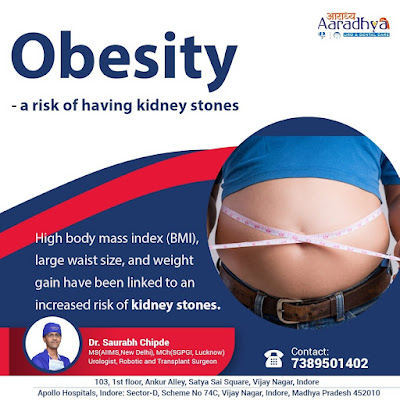
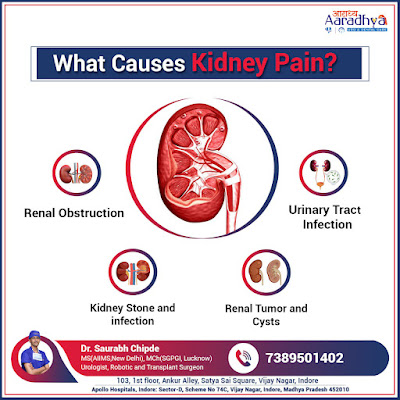
When certain substances, such as calcium, oxalate, and uric acid, become concentrated enough to form crystals in the kidneys, kidney stones are formed. These crystals grow larger in size and eventually develop into “Stones”. Generally, 80-85% of kidney stones are made up of calcium. Some stones made up of uric acid are also found in people with low urine pH levels. After their formation in the kidneys, the stones move and pass to the ureter and block the flow of urine. This leads to prolonged periods of intense pain, including flank pain (pain in one side of the body between the stomach and the back), sometimes with blood in the urine, nausea, and vomiting. They may cause frequent urination, bladder pressure, or pain in the groin as the stones pass down the ureter towards the bladder. Dealing with the passing of the stone Kidney stones generally take from several weeks to a few months to pass; the duration depends on the number of stones and their size. Easily available pain-relieving...

Early sign and symptoms of Kidney cancer

Image
Introduction:- Kidney cancer -- moreover called renal cancer -- is a disease in which kidney cells evolve malignant (cancerous) and thrive out of control, constructing a tumor. Nearly all kidney cancers early seem in the lining of small tubes (tubules) in the kidney. This category of kidney cancer is called renal cell carcinoma. The good thing is that maximum kidney cancers are established before they scatter (metastasize) to distant organs. And cancers grabbed early are simpler to deal with successfully. However, these tumors can thrive to be relatively large before they are observed. Kidney cancer among grown-ups consists of malignant tumors occurring from the renal parenchyma and renal pelvis. Almost all renal pelvis cancers are of the transitional cell type, including less than 10% of the microscopically assessed kidney carcinomas. The shifting prevalence of understood risk components for renal cell cancer, comprising cigarette smoking, obesity, and hypertension, may also be impac...

All we need to know about proastate enlargement

Image
The prostate gland is a part of the reproductive system whose secretion supports sperm formation. This gland is located inside the abdomen just below the urinary bladder and on the topmost region of the urethra which drains urine from bladder to urethra. It is one among the three glands of a reproductive system whose secretion is alkaline and provides nutrition and lubrication for the maturation and motility of sperm. The prostate gland secretes fibrinolysin, zinc, prostate-specific antigen, a proteolytic enzyme, etc, and together with seminal vesicle forms the major fluid part of the seminal plasma and the semen also. Due to certain unknown regions the size of the prostate gland increases and affects the homeostasis of the body. If the size of the prostate increases it puts pressure on the bladder and the urethra too, through which urine is transported from the bladder out through the penis. In medical terms, this condition of enlarged prostate is called benign prostatic hyperplasia ...

What is urinary tract infection & how to prevent them

Image
Urinary tract infection or UTI is generally defined as an infection in any of the part of the urinary system - that is in kidneys,  uratus, urinary bladder and urethra. Most of the infections are in the lower urinary tract that is the bladder and urethra. Women are more likely to be at a greater risk of developing UTI than men.  Typically the urine doesn't contain any bacteria urine is the byproduct of the kidneys, when the waste product and the excess amount of water is removed from the body by kidneys and urine is created, normally the urine moves through the urinary system without any containment, moreover the bacteria which can cause urinary tract infection can get into the urinary system from outside the body causing many problems like inflammation &  infections.  Urinary tract infections are generally very common that occur mostly in 1 out of 5 women in their lifetime, it's often seen that urinary tract infections are more common in women this is because t...

HOW DO YOU GET KIDNEY STONES?

Image
A kidney stone can be as tiny as a grain of sand, and you can pass it in your pee without ever knowing. But a bigger one can block your urine flow and hurt a lot. Some people say the pain can be worse than childbirth. They usually consist of calcium oxalate but may be composed of several other compounds. Kidney stones can grow to the size of a golf ball while maintaining a sharp, crystalline structure. The stones may be small and pass unnoticed through the urinary tract, but they can also cause extreme pain as they leave the body. Symptoms: A kidney stone usually remains symptomless until it moves into the ureter. When symptoms of kidney stones become apparent, they commonly include:  Severe pain in the groin and/or side Blood in urine Vomiting and nausea White blood cells or pus in the urine Reduced amount of urine excreted Burning sensation during urination Persistent urge to urinate Fever and chills if there is an infection Causes: The leading cause of kidney stones is a lack o...

HOW DOES CAFFEINE AFFECT THE URINARY TRACT?

Image
Caffeine is generally the world's most popular drug which is used over the time. Caffeine has a direct effect on brain and central nervous system, unaware of the fact in today's world people are consuming caffeine more and more which leads to major health problems. Caffeine work as an inhibitor for the human body but overuse of caffeine may be harmful and has many side effects. Some of the side effects of caffeine intake can include insomnia, irritability, headache, heartburn, indigestion, nervousness and the most common side effect that is frequent urination.  How does it affect the bladder: Caffeine is diuretic in nature which means it it results in increase in frequency of urination, it is also responsible for the increase urge to urinate if consumed in excessive amount. The caffeine has a direct effect on bladder's smooth muscle. And also indicates the tissue of the bladder that cause involuntary bladder contraction. Excessive amount of caffeine intake may lead to  urin...

BPH: Know About 4 Most Effective Treatment Options!

Image
BPH Stands for benign prostatic hyperplasia , it is a non cancerous enlargement of the prostate gland, and is also the most common benign tumor. Most commonly BPH produces symptoms by abstracting the flow of urine through urethra. By older ages a person can experience severe symptoms that requires treatment. Sign and Symptoms- The sign and symptoms of BPH veries according to the cause which is by ureteral obstruction or due to any secondary changes in the bladder. 1. Obstructive symptoms Dribbling in the end of urination Weak urine stream.  Interrupted urine flow 2. Bladder changes symptoms Sudden urgency to urinate Frequent urination Frequent waking up at night to urinat When BPH treatment is necessary-  Where is is an unpredictable course of BPH in any individual . Because the symptoms can you remain constant for many years and in some of the people it may improve over time. Decisions that are regarding treatment are based on how severe the symptom is, as well as the extent ...